Design Challenge
How can an interactive digital product facilitate that still usable interior items from residents of small homes in Amsterdam are transferred to interested fellow city residents, instead of being disposed of as bulky waste? At the same time, how can the platform ensure that the person who wants to discard the object can do so quickly, efficiently, and with minimal effort?
Boris Suynderhoud _INT/EXT
User Research
I decided to first map out my target group and understand how they perceive the current situation. For this purpose, I conducted in-depth interviews with residents of small homes in Amsterdam to gain more detailed insights into their vexperiences and perspectives.
Stakeholder Interviews
To gain a better understanding of the scale of the problem and what would be required to solve it I conducted extensive interviews with stakeholder Breg Stromph, the coordinator of Het Afvalpaleis, a sustainable initiative that contributes to a more circular local economy.
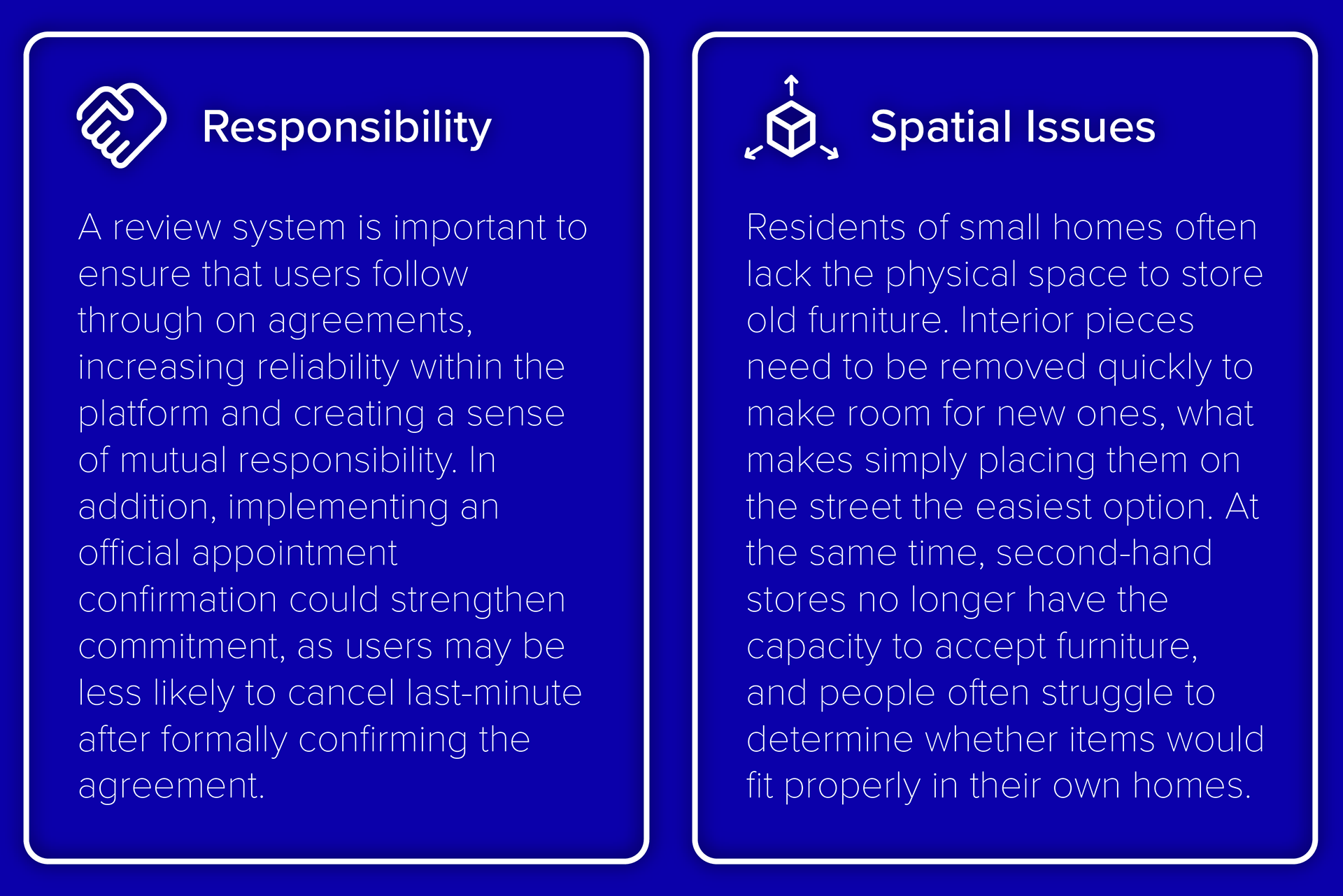
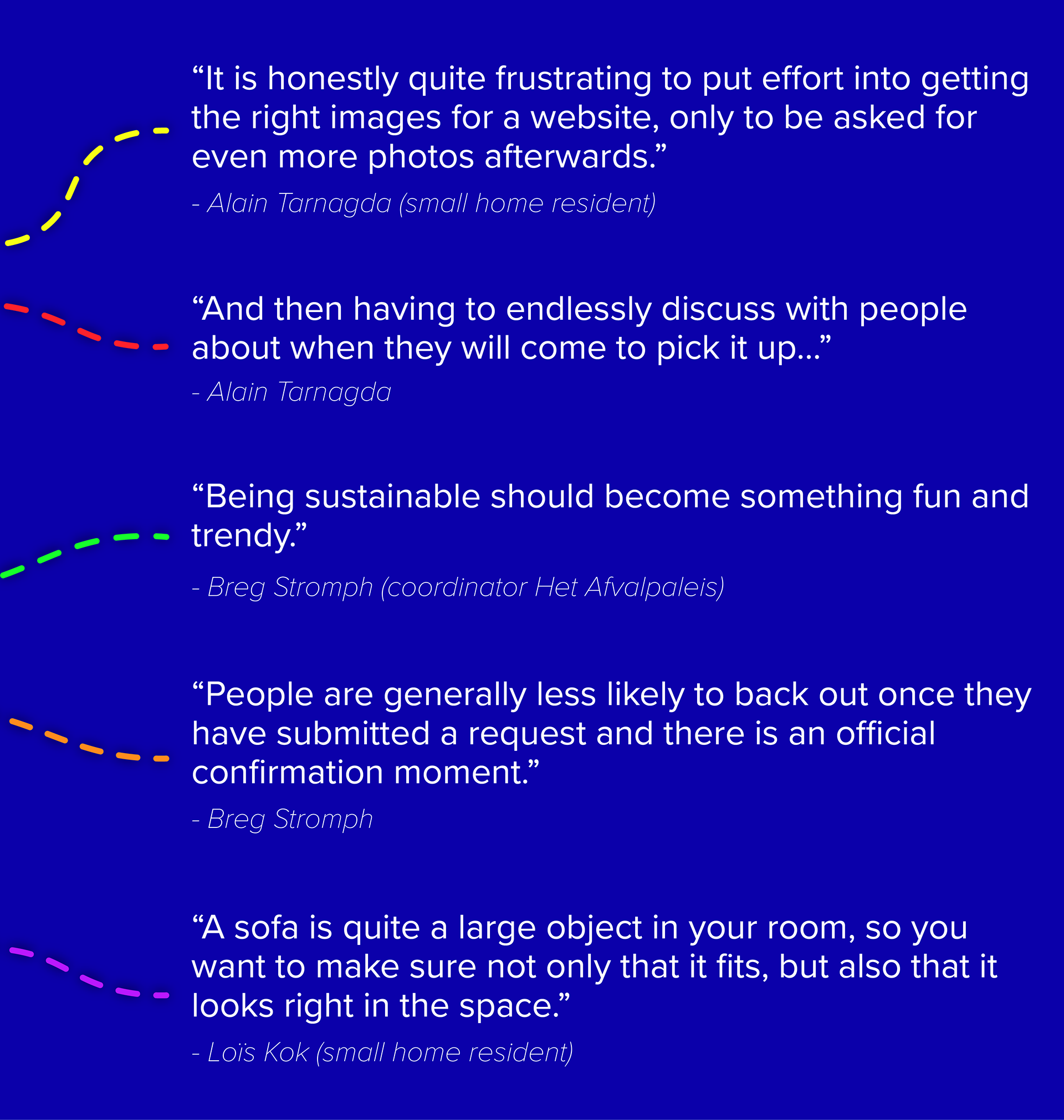
Key Insights:
Market Analysis
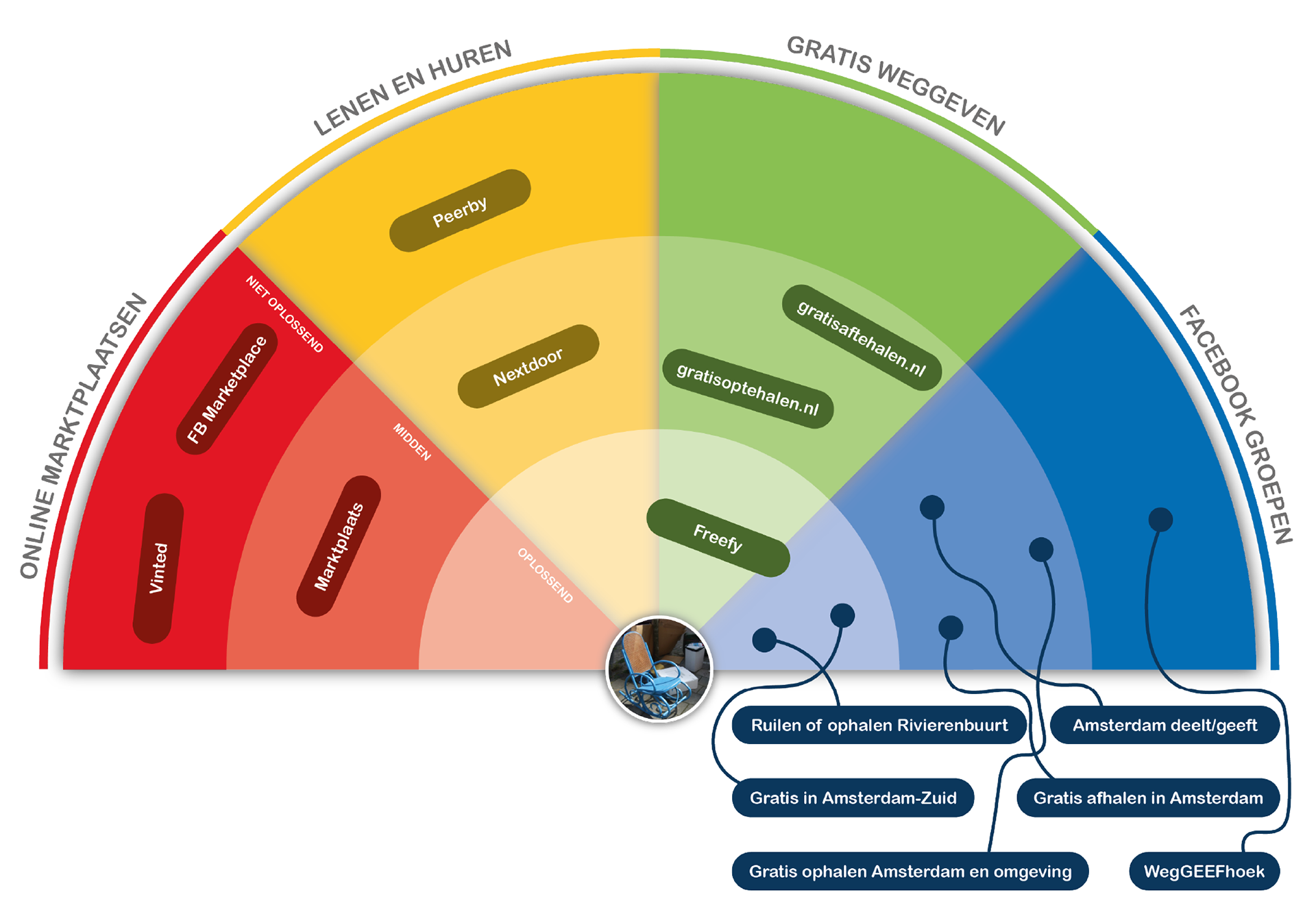
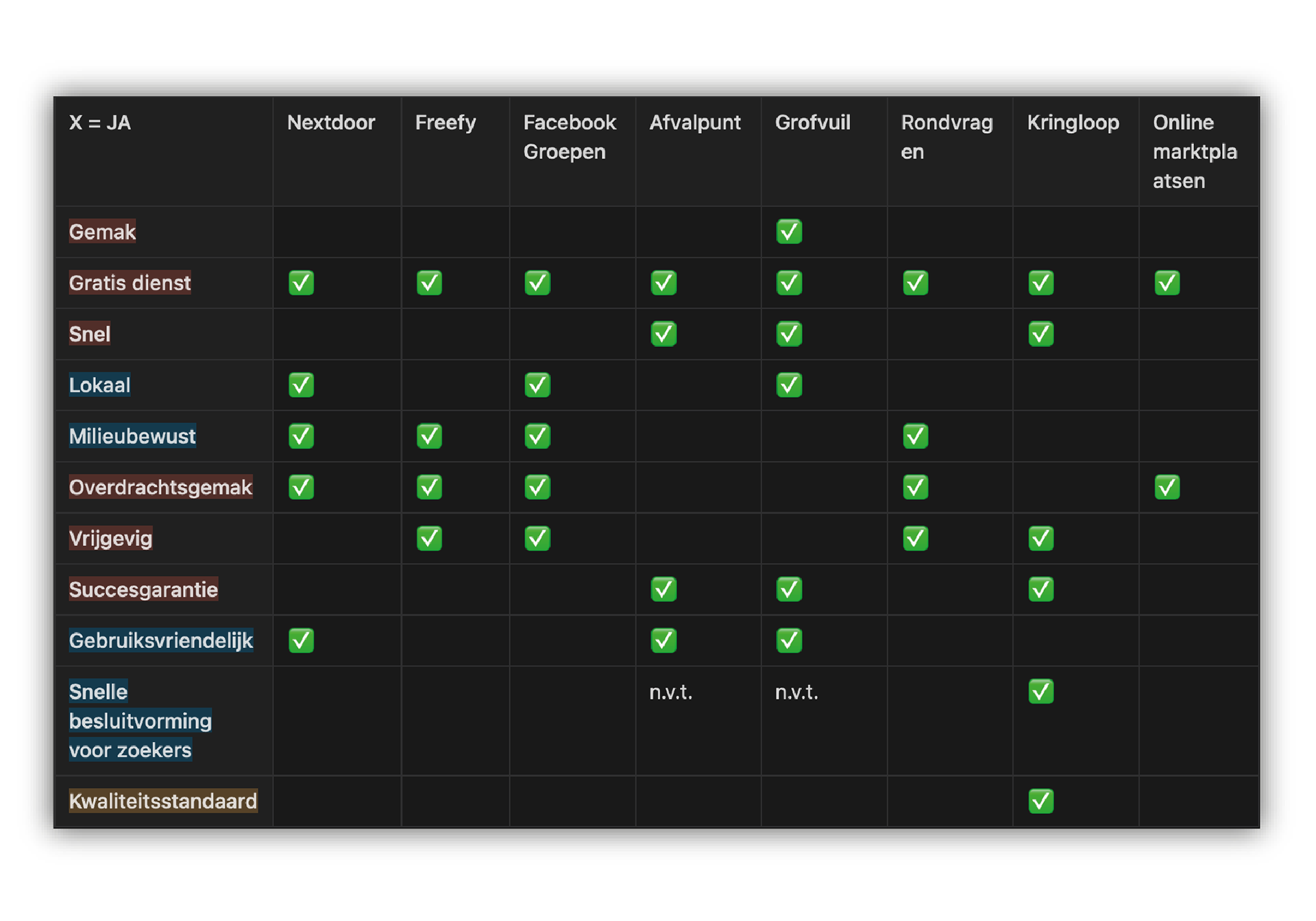
I conducted a competitive analysis to examine existing alternatives to bulky waste disposal. I mapped these solutions in a visual overview and evaluated them using a comparison table based on criteria relevant to my project. This helped identify gaps, strengths, and opportunities for improvement.
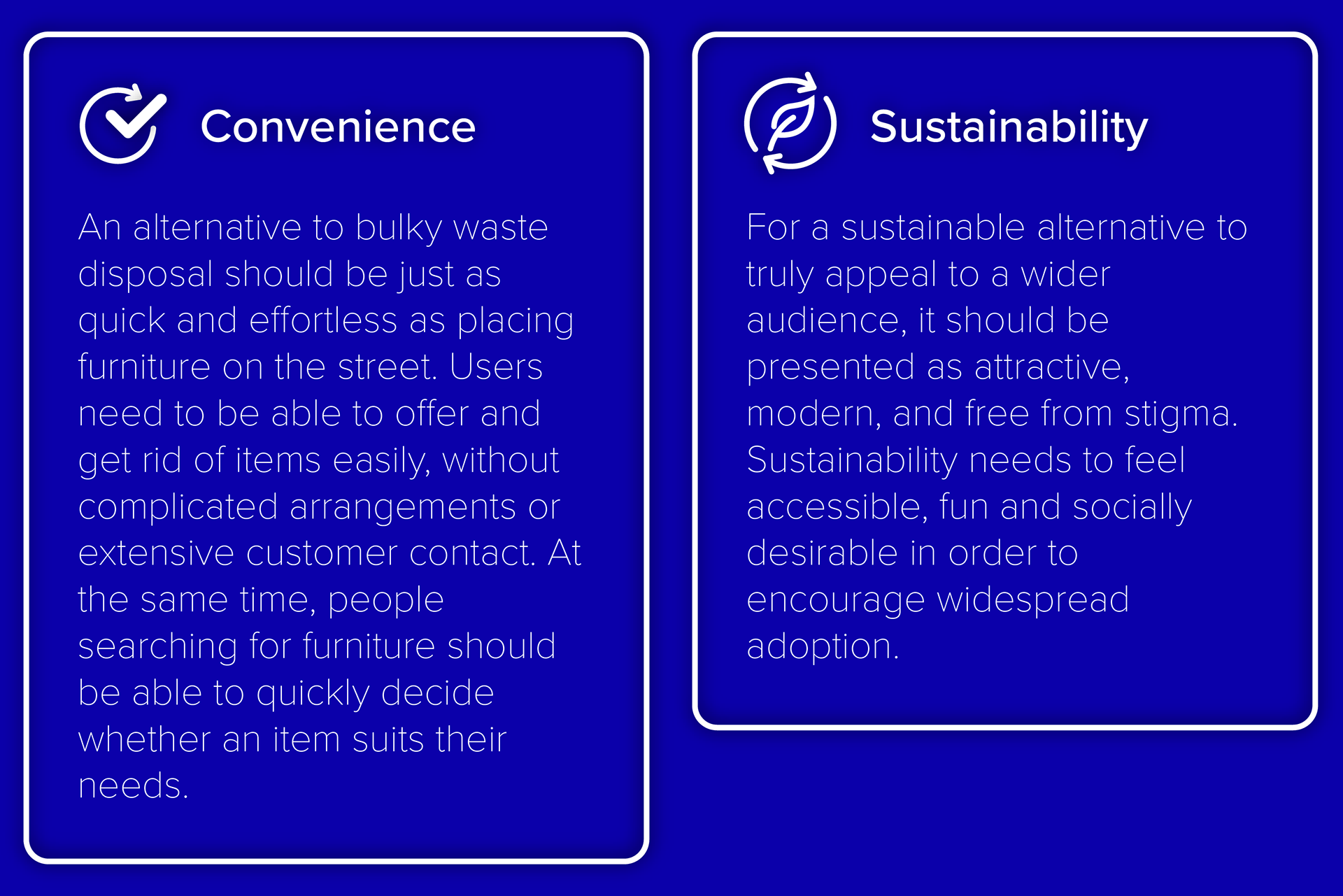
The analysis showed that none of the current alternatives match the convenience of bulky waste disposal. No existing solution allows users to get rid of furniture as quickly and effortlessly. Although some platforms come close, they lack usability and do not help users make quick and confident decisions.
Concept
Lo-Fi Prototype
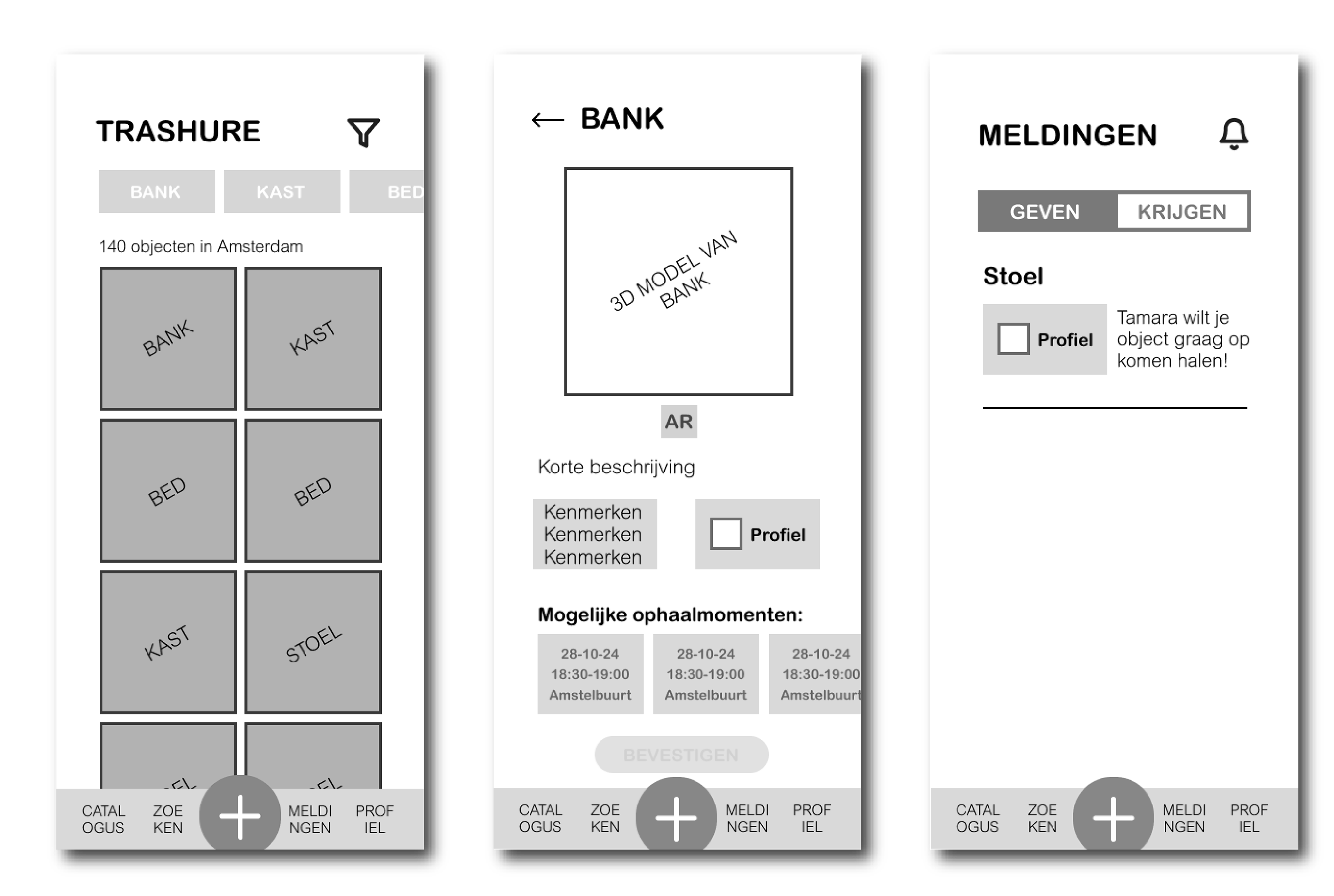
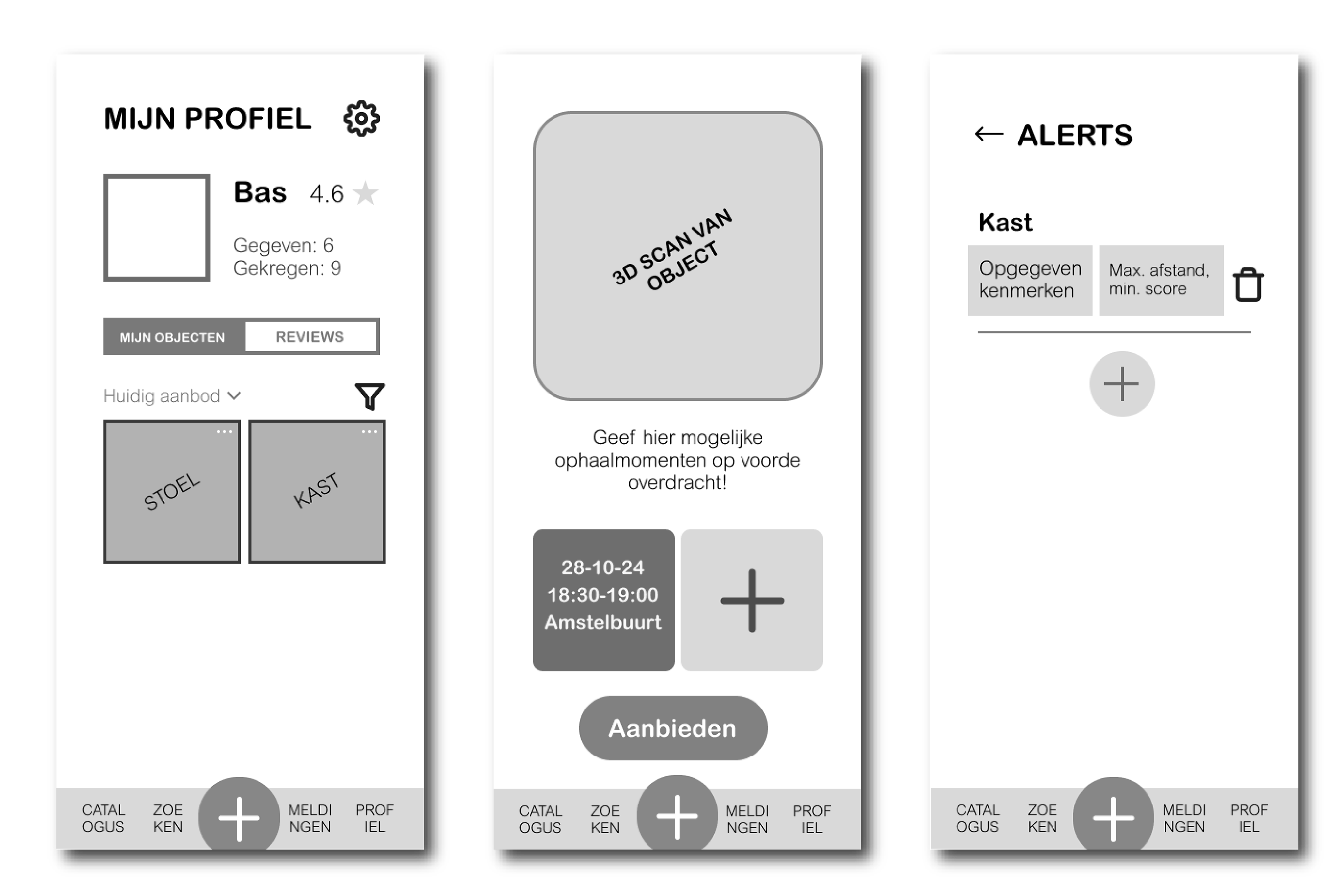
After defining the concept of Trashure, I developed a user flow/sitemap to structure the platform and clarify how users would navigate through the different steps of the process. The purpose of this was to ensure that the low-fidelity prototype would be aligned with the user experience goals.
Based on this structure, I created a low-fidelity prototype to test the initial layout and core functionalities. This prototype allowed me to conduct usability tests at an early stage, in order to evaluate whether the flow was clear, understandable, and aligned with the needs of the target group before further developing the design.
Usability Tests
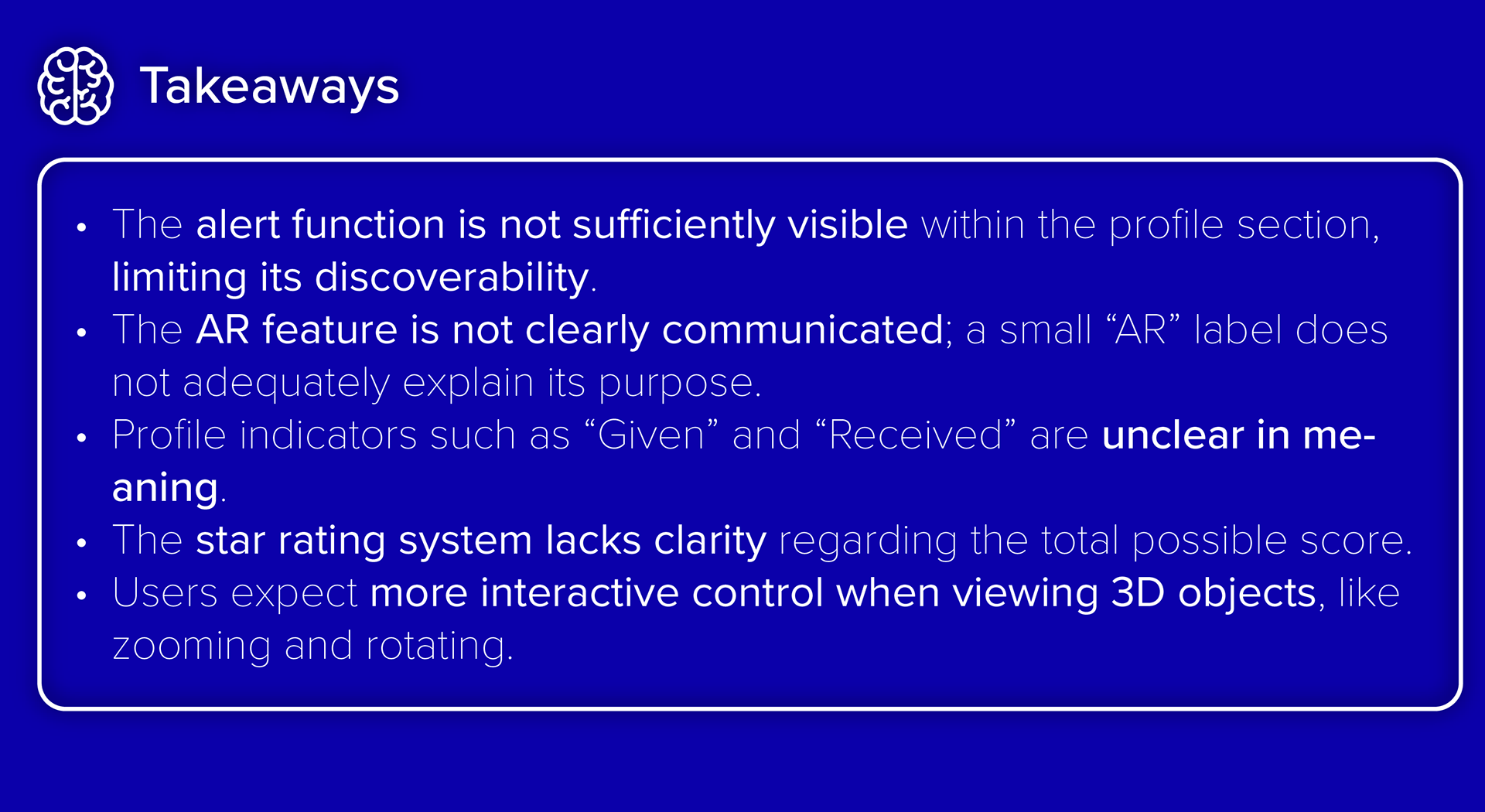
Through multiple rounds of usability testing, I was able to refine and improve the user flow and core functionalities of the app. By observing how users interacted with the prototype, I identified points of confusion and unnecessary steps. This iterative process helped me simplify the flow and ensure that the platform remains intuitive, efficient, and aligned with the needs of the target group.
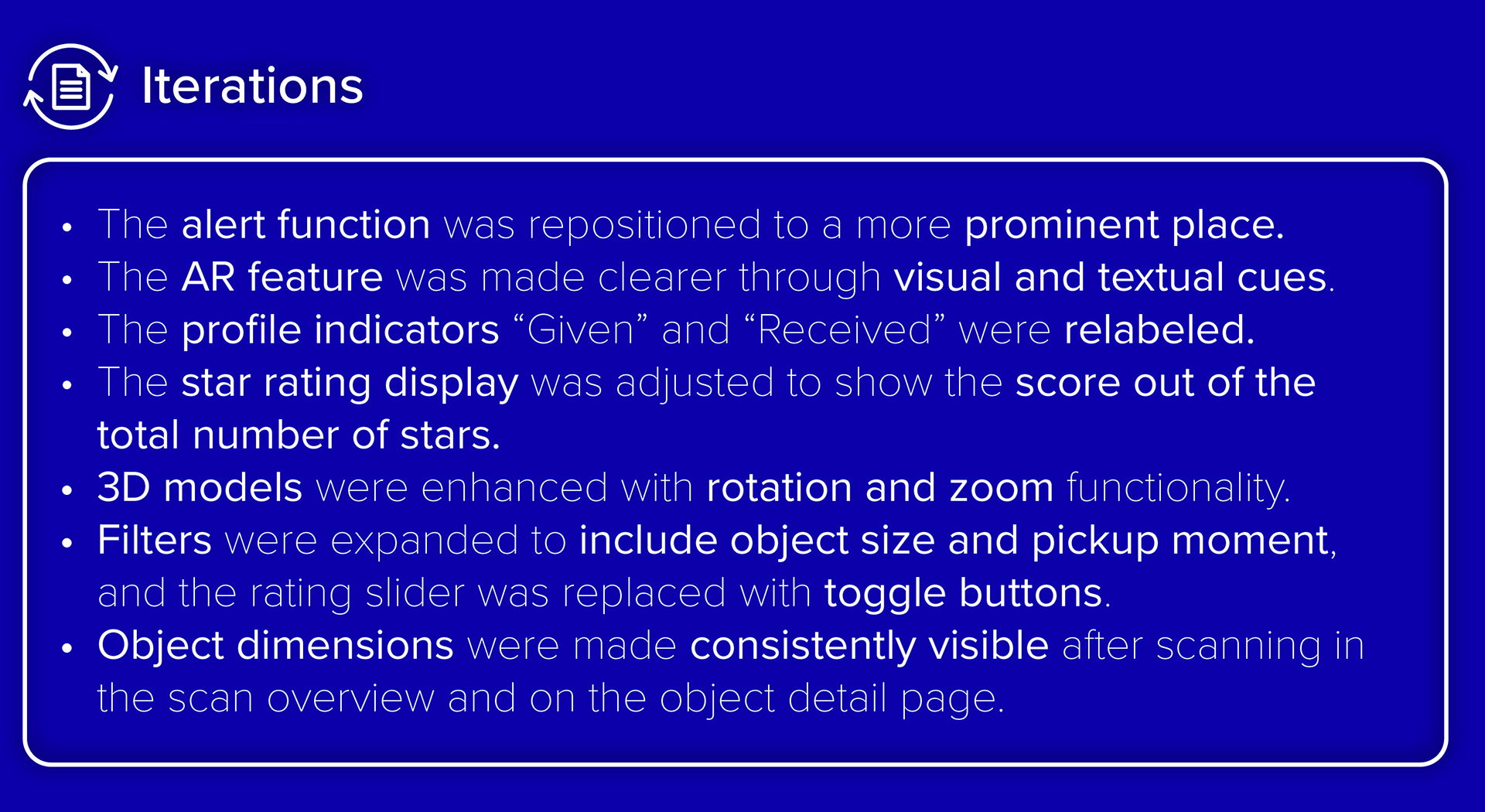
Iterations
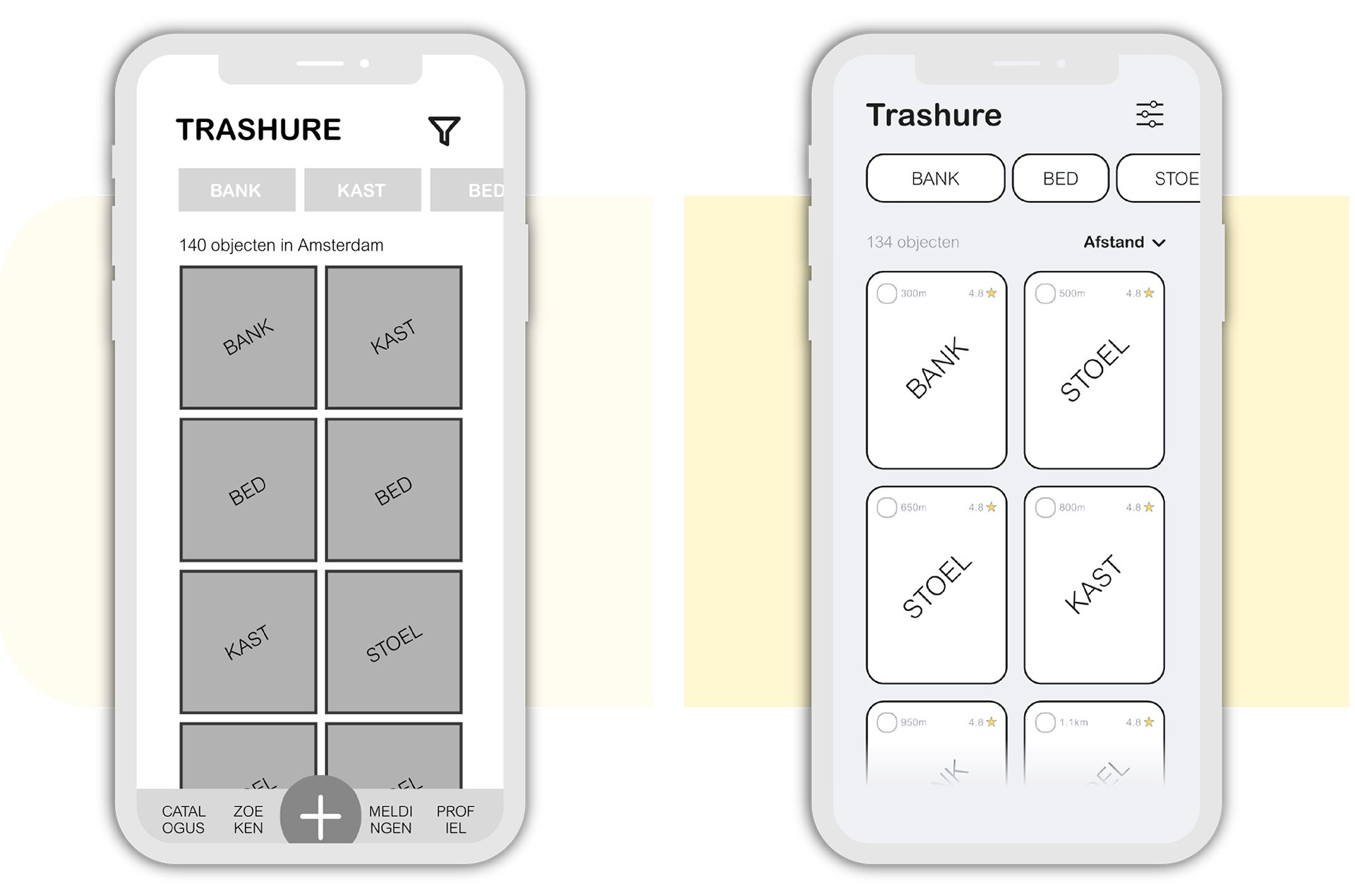
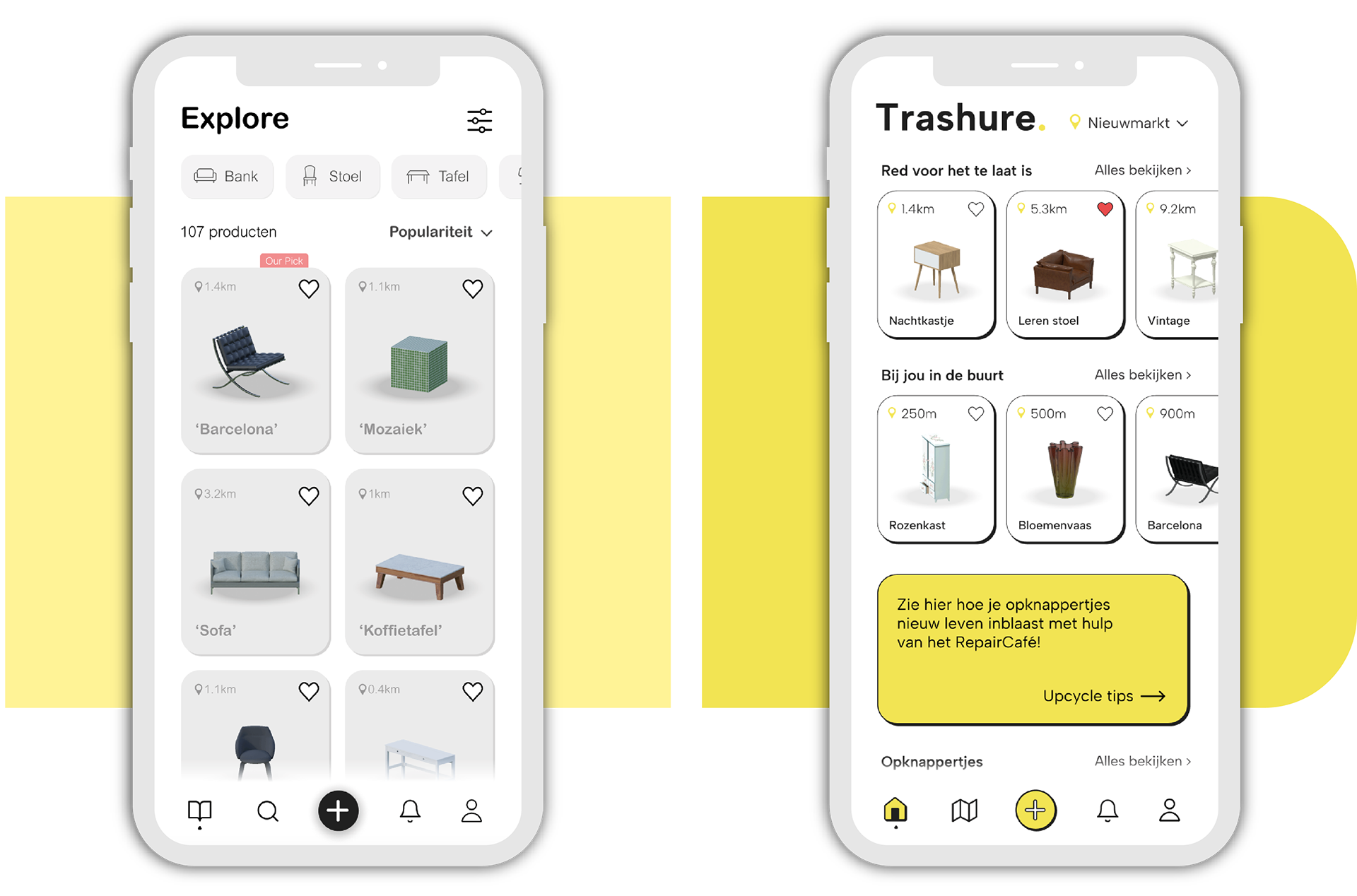
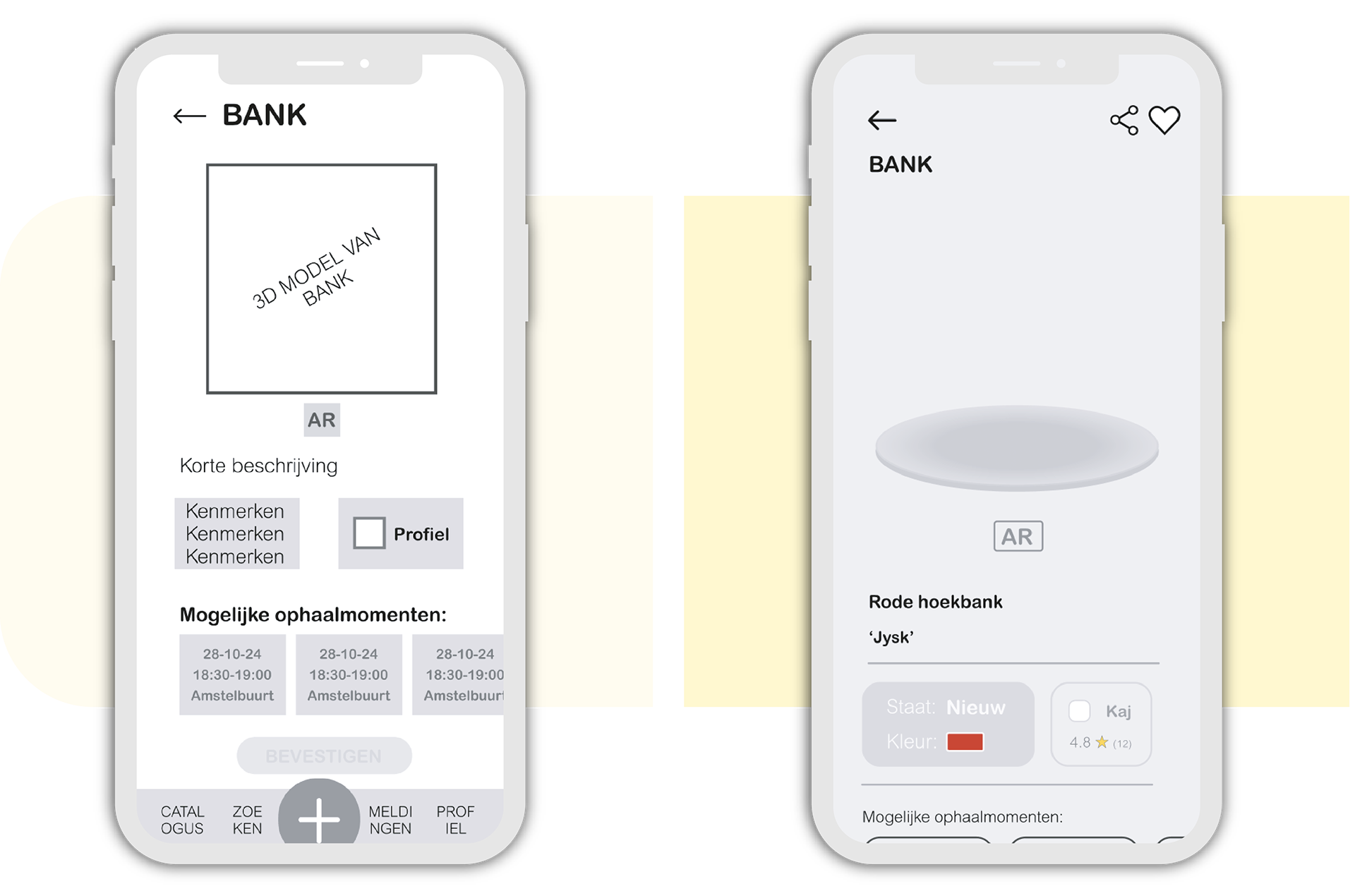
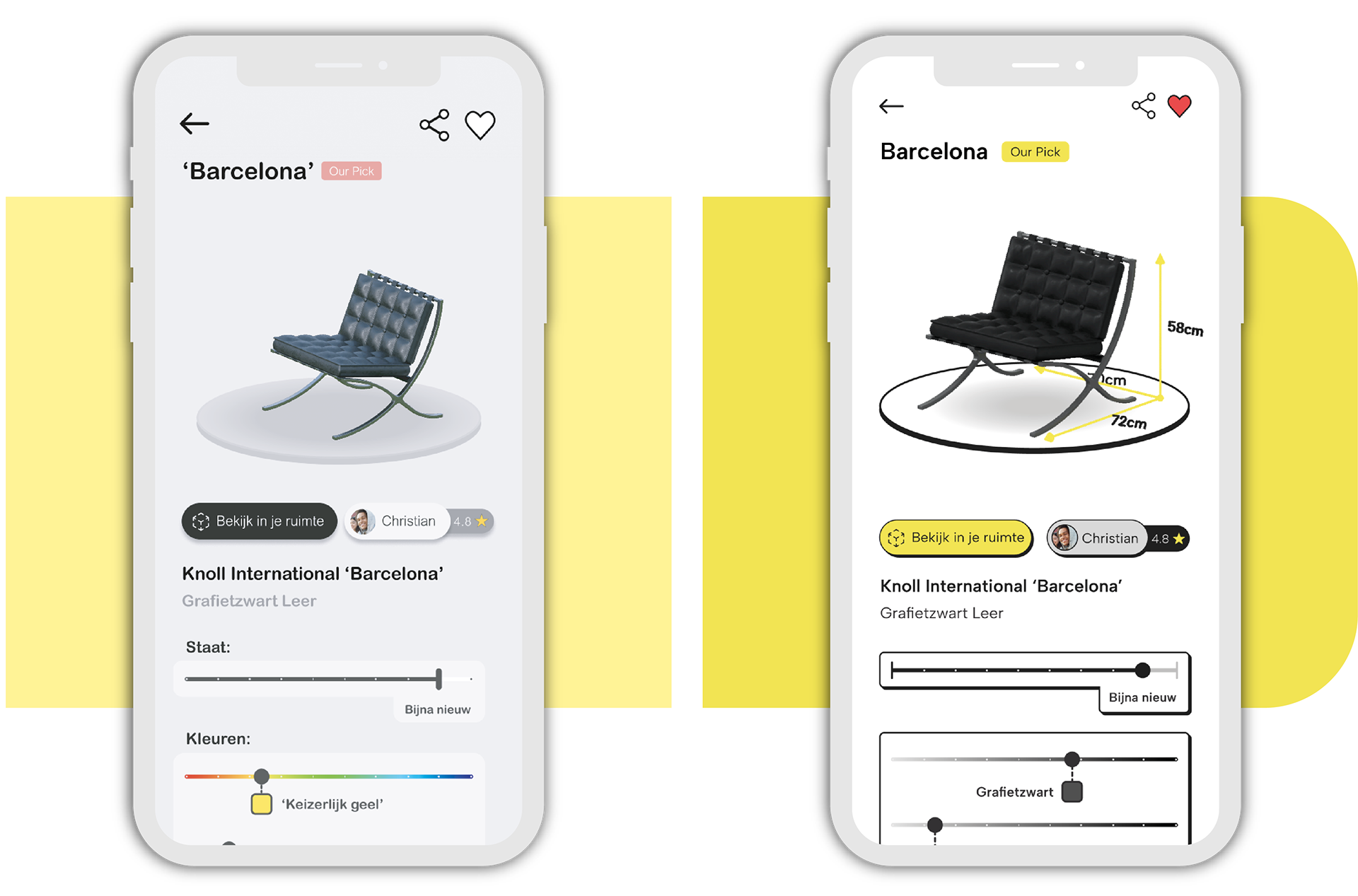
The following iterations show how the homepage and object page evolved throughout the design process. Based on insights from usability testing, research and feedback, several adjustments were made to improve clarity, navigation, and overall usability.
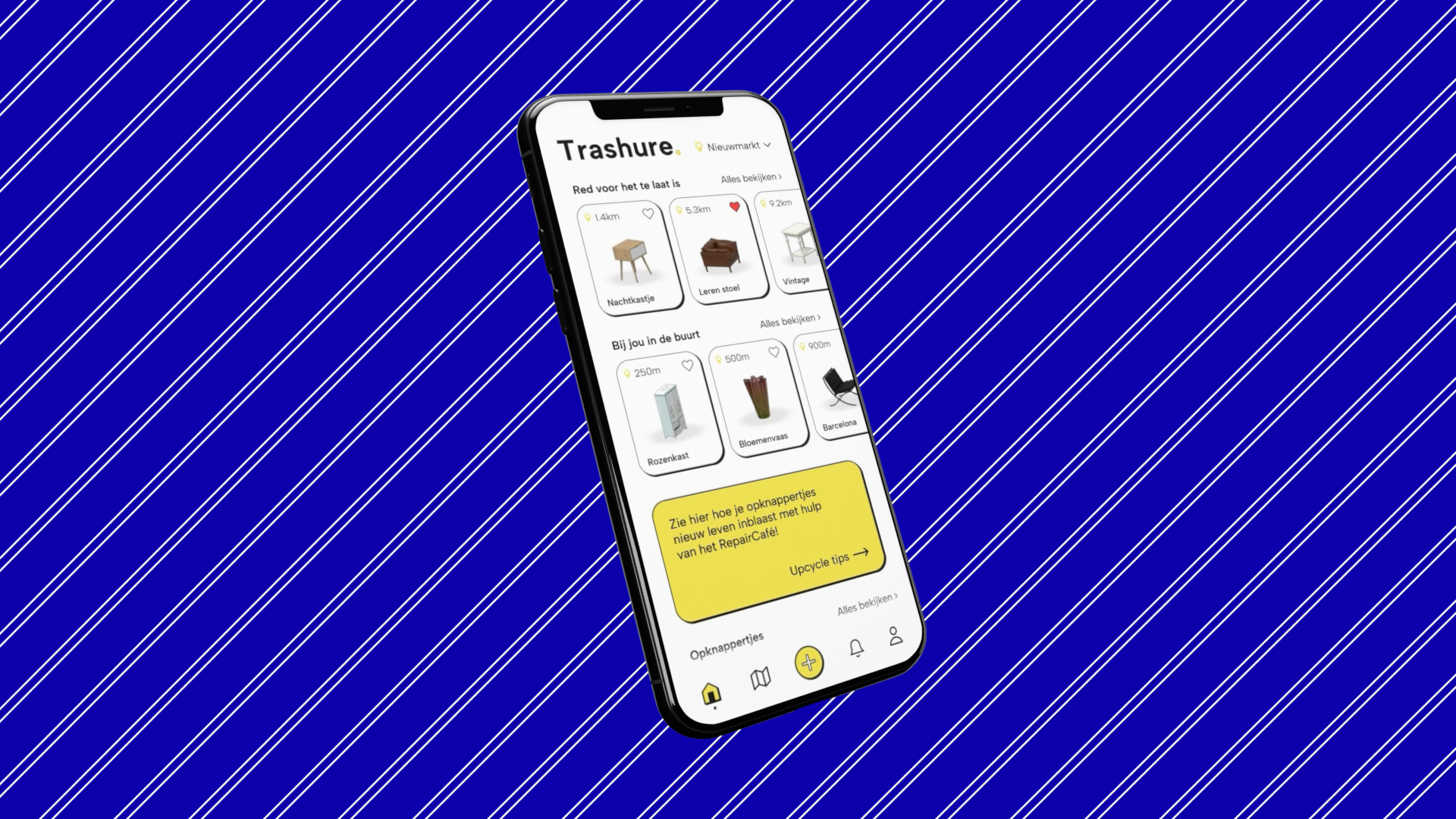
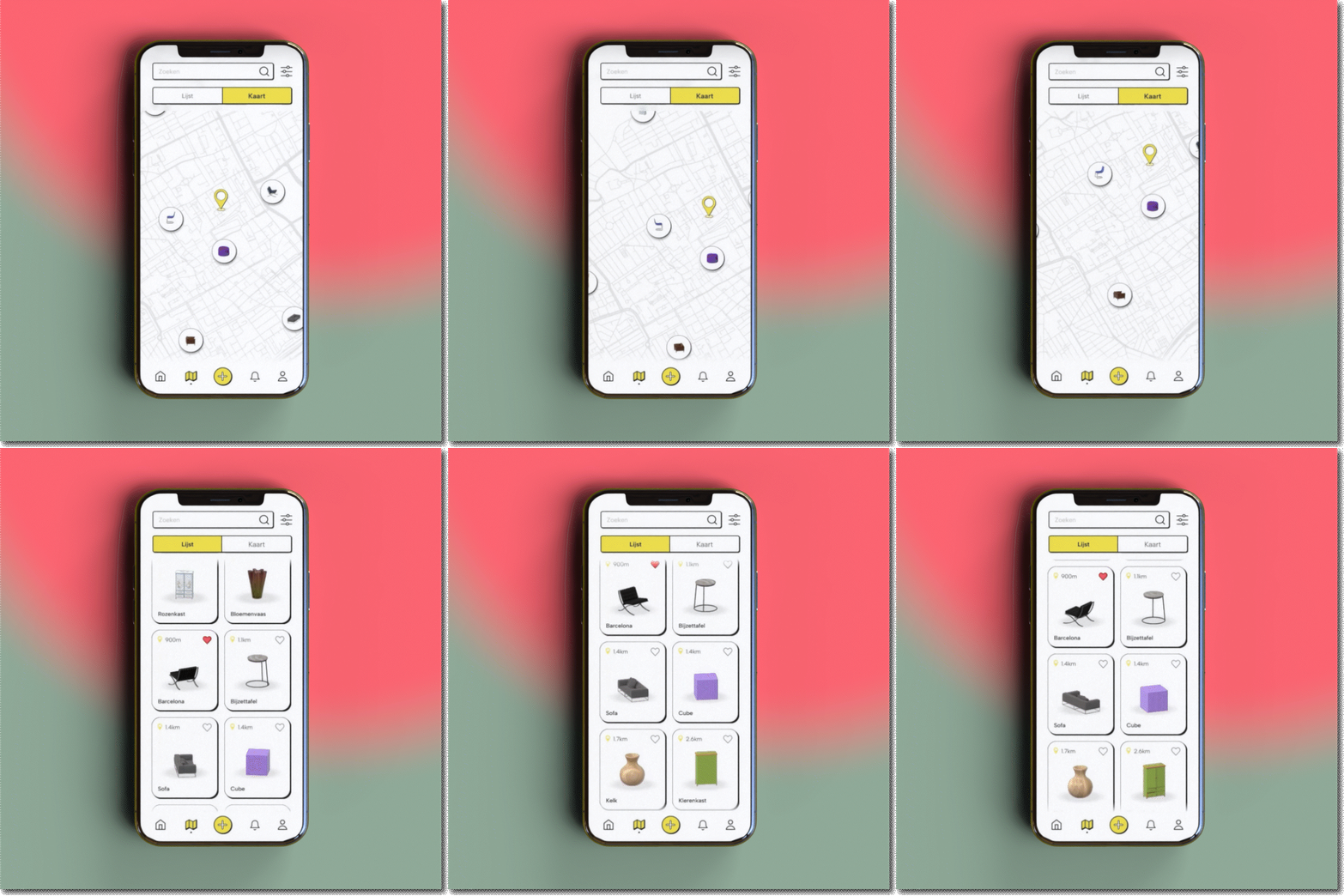
The homepage evolved from a simple catalogue into a more structured browsing experience. Later iterations introduced branding, clearer categories, location-based sections, and highlighted items to help users quickly find relevant furniture nearby.
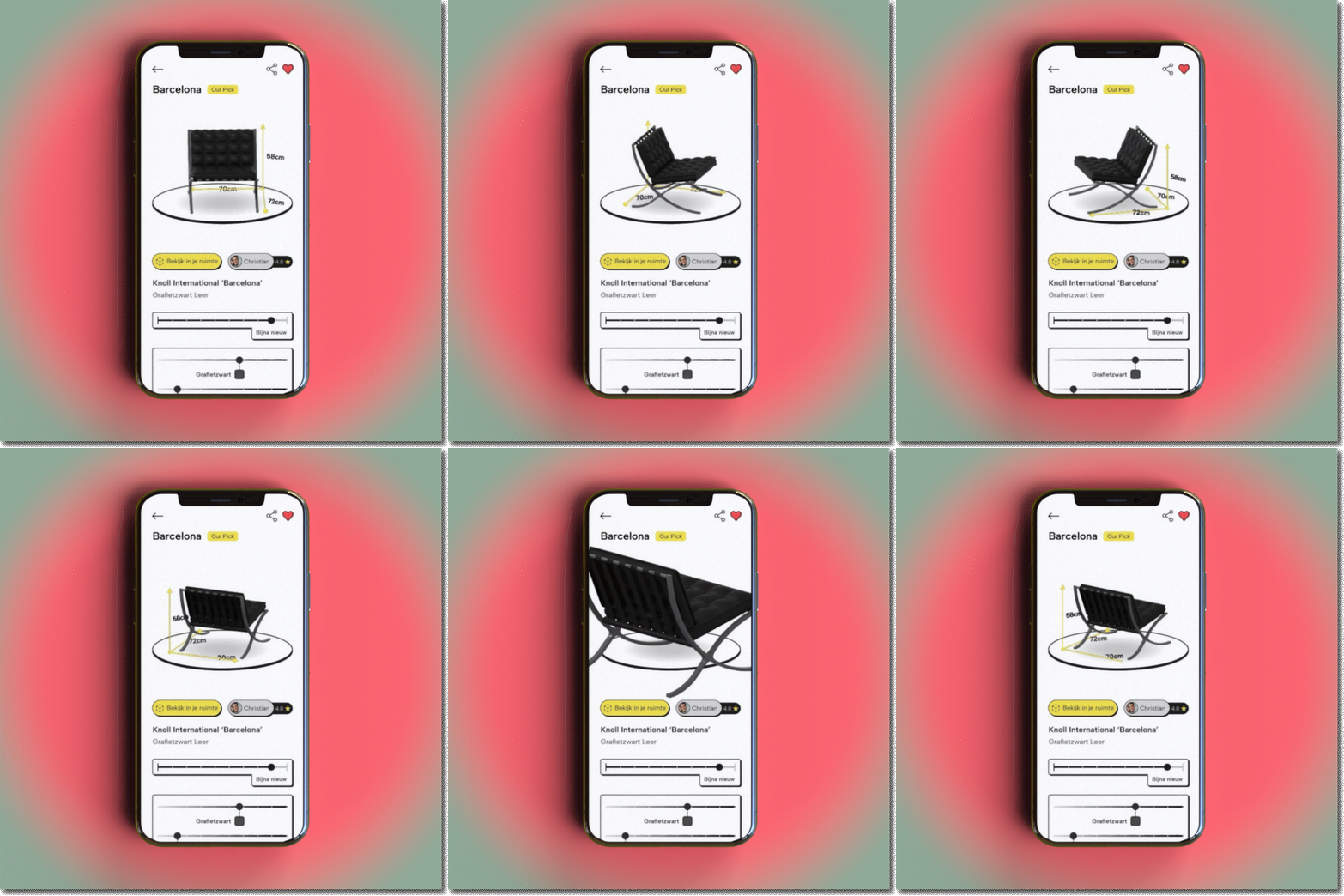
The object page was refined to better highlight key information such as object details, measurements, and pickup options. Improvements also strengthened navigation and the interaction with the 3D model, helping users evaluate items before requesting them.
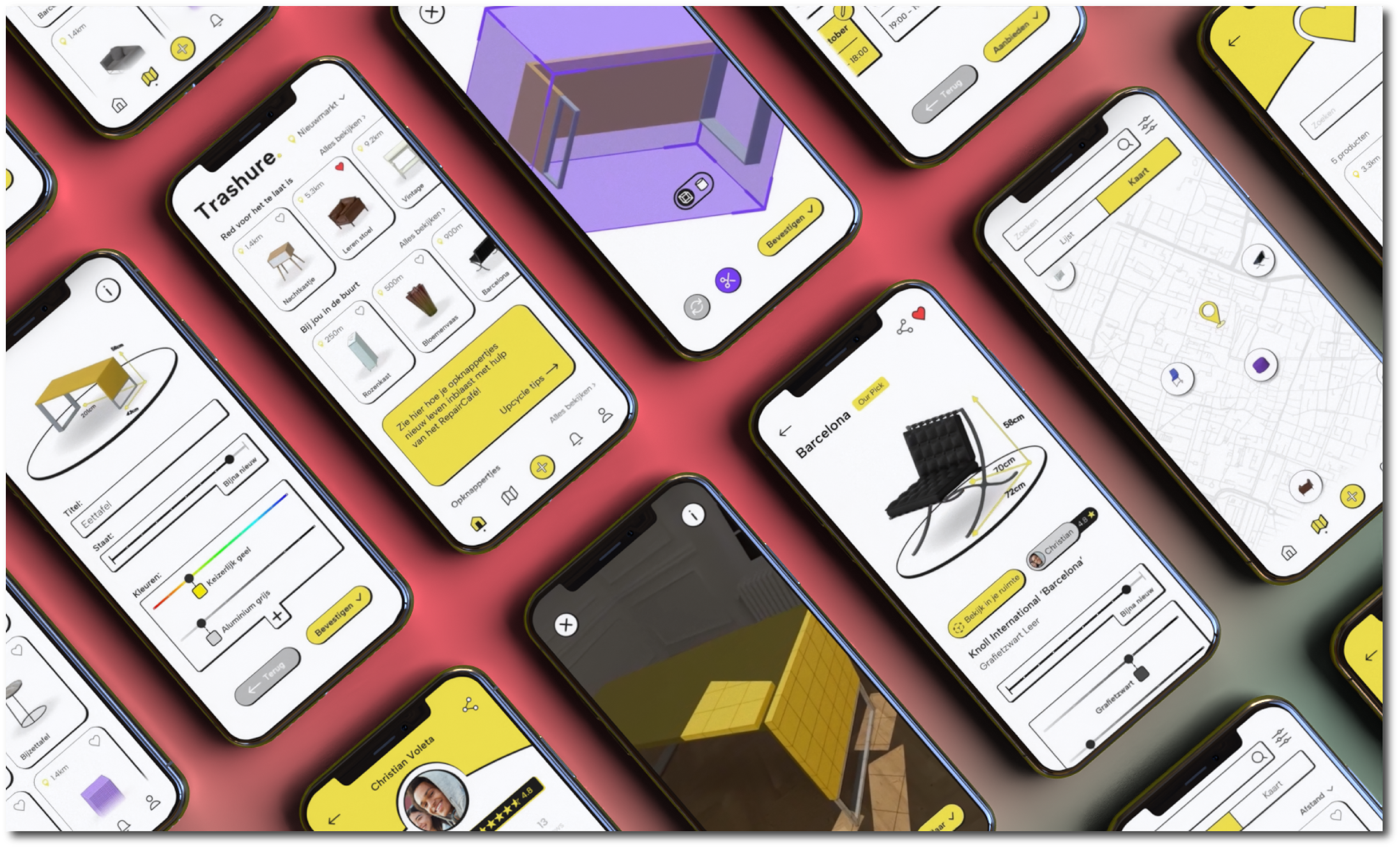
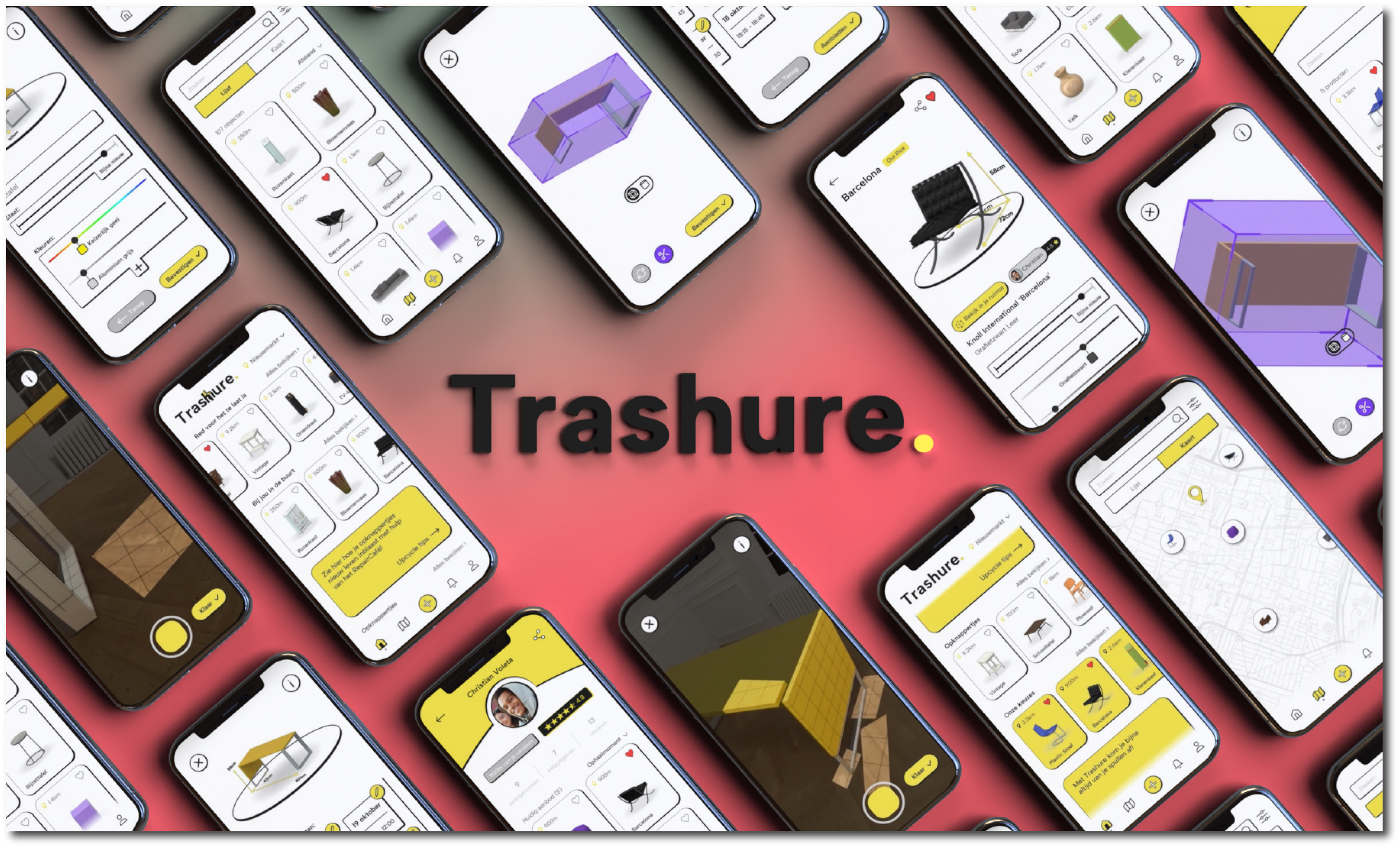
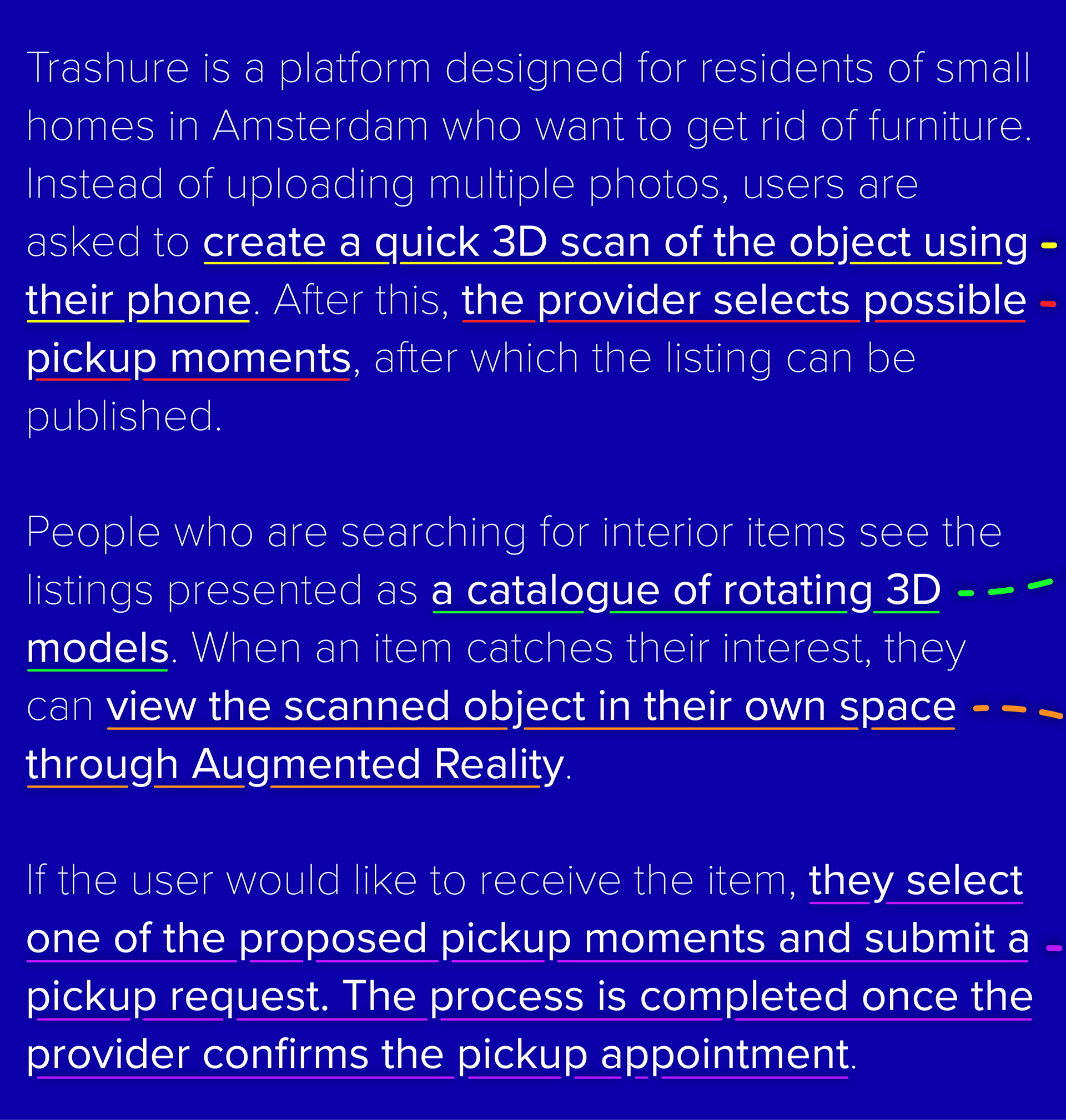
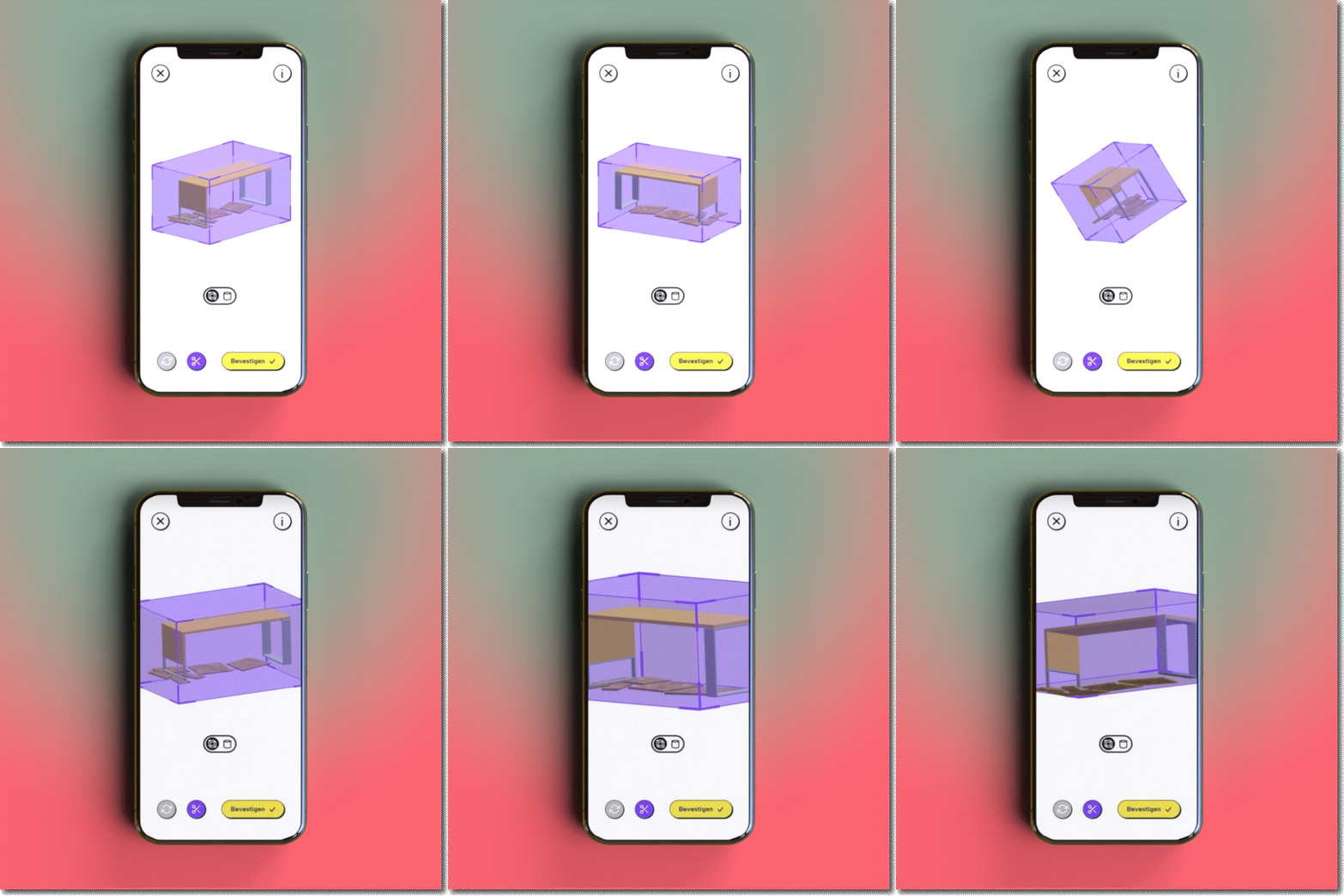
Users can scan their own furniture to create accurate 3D models that others can preview at home before adopting. The scanned models can easily be retouched by using a cropping shape (circular or square), making the process intuitive for everyone. Donors can set preferred pickup dates and times, enabling furniture seekers to arrange handovers with minimal negotiation or hassle.
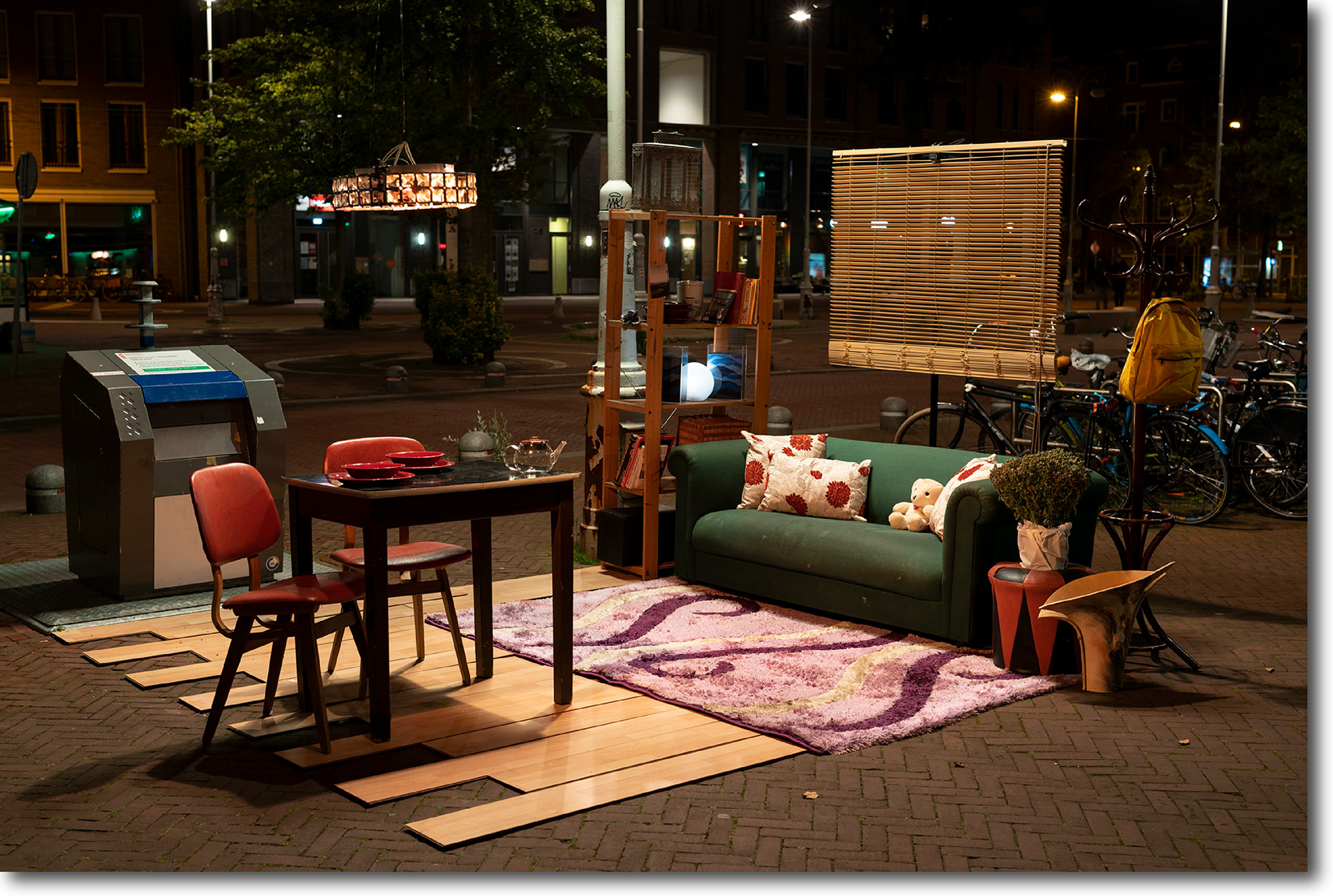
The platform highlights a circular approach to consumption, strengthening community connections in cities like Amsterdam. Through technology, Trashure turns waste prevention into a modern, creative experience that supports both the environment and local residents.